
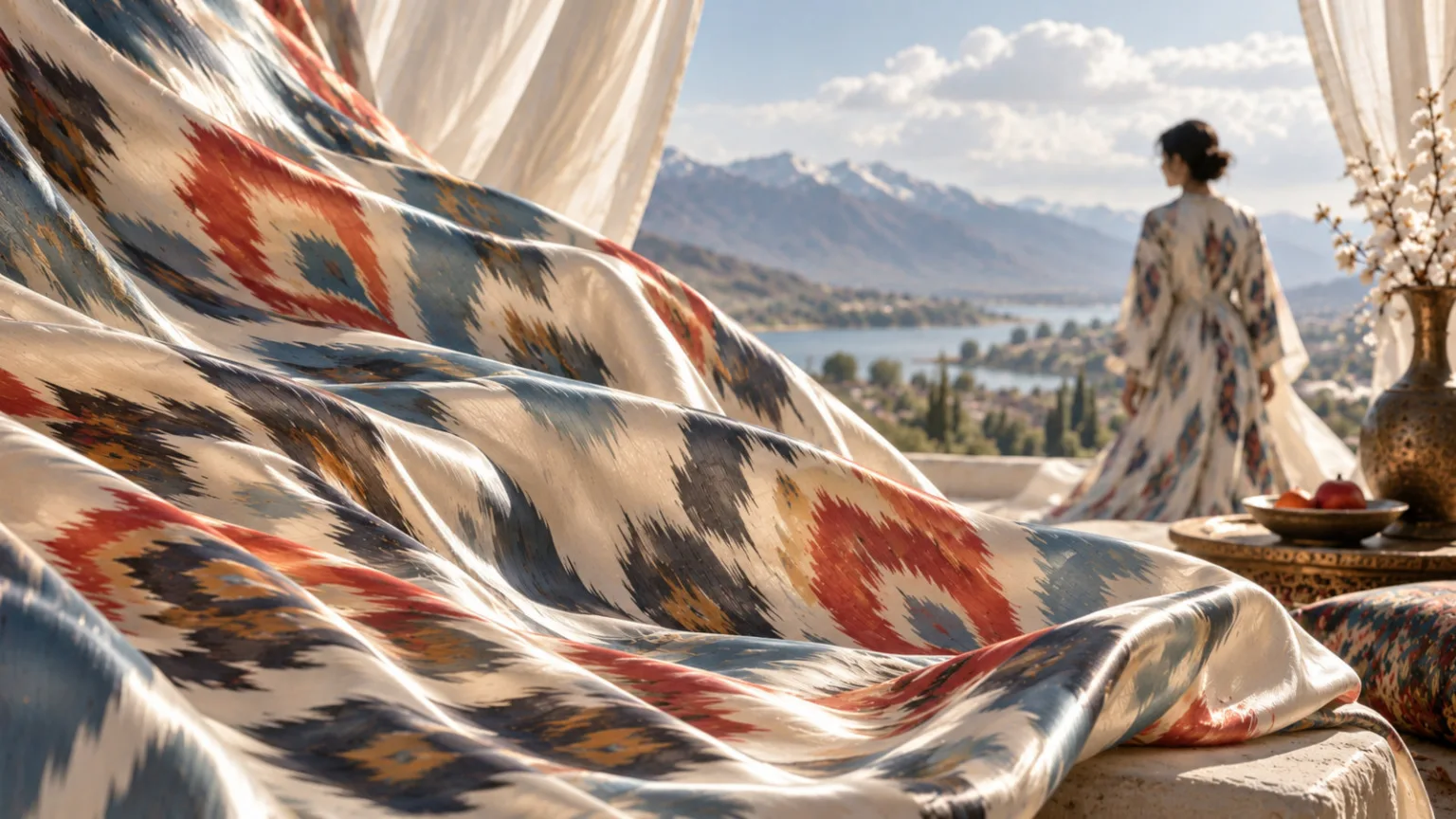
We begin with the themes of our first collection: abr textiles, cloud-like patterns, and techniques for creating dimensional textures.
The first InLayers collection begins with the Uzbek abr pattern. We are preparing for a journey to meet the people who keep this tradition alive and understand its place in the present. But first, we want to explore a few questions. Where did abr originate? How is ikat made? Why are its blurred edges a philosophy rather than an accident? And what does this pattern mean today?
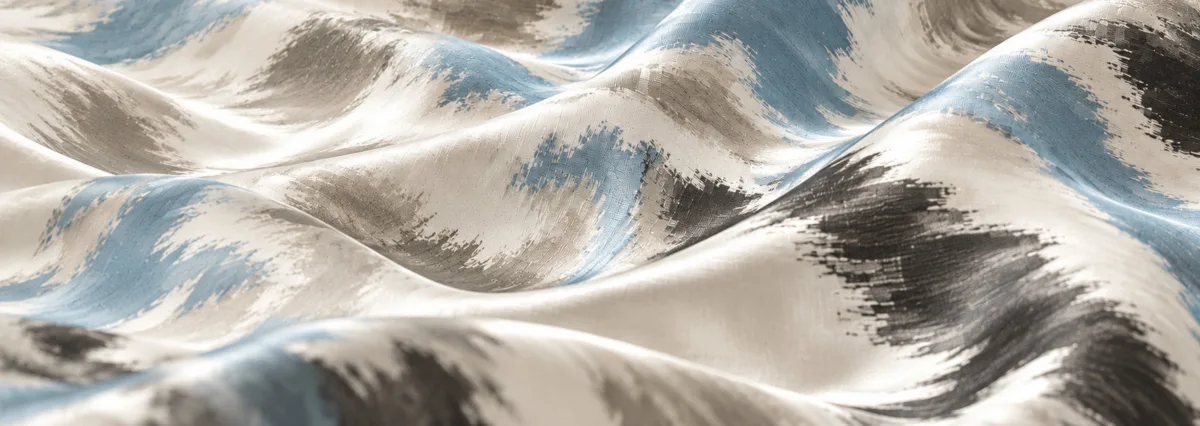
Imagine an outline that cannot be traced. A boundary that dissolves before it can become distinct. This is abr, a pattern whose name comes from the Persian word for ‘cloud’ or ‘mist’.
On Uzbek silk textiles, it looks as though someone captured the sky above Registan just before the rain. This softness is the result of an ancient yarn-resist dyeing technique known around the world as ikat (from the Malay mengikat, meaning ‘to tie’).
In Central Asia, this method has historically been called abrbandi, meaning ‘tying clouds’ in Persian. The history of abr is a story of techniques, people, and meanings traveling along the Silk Road.
Archaeological evidence points to resist dyeing in Iran and Sogdiana as early as the seventh and eighth centuries. Its great flourishing came during the Timurid era (fourteenth–fifteenth centuries), when Samarkand and Bukhara became major centers of craftsmanship in the Islamic world.
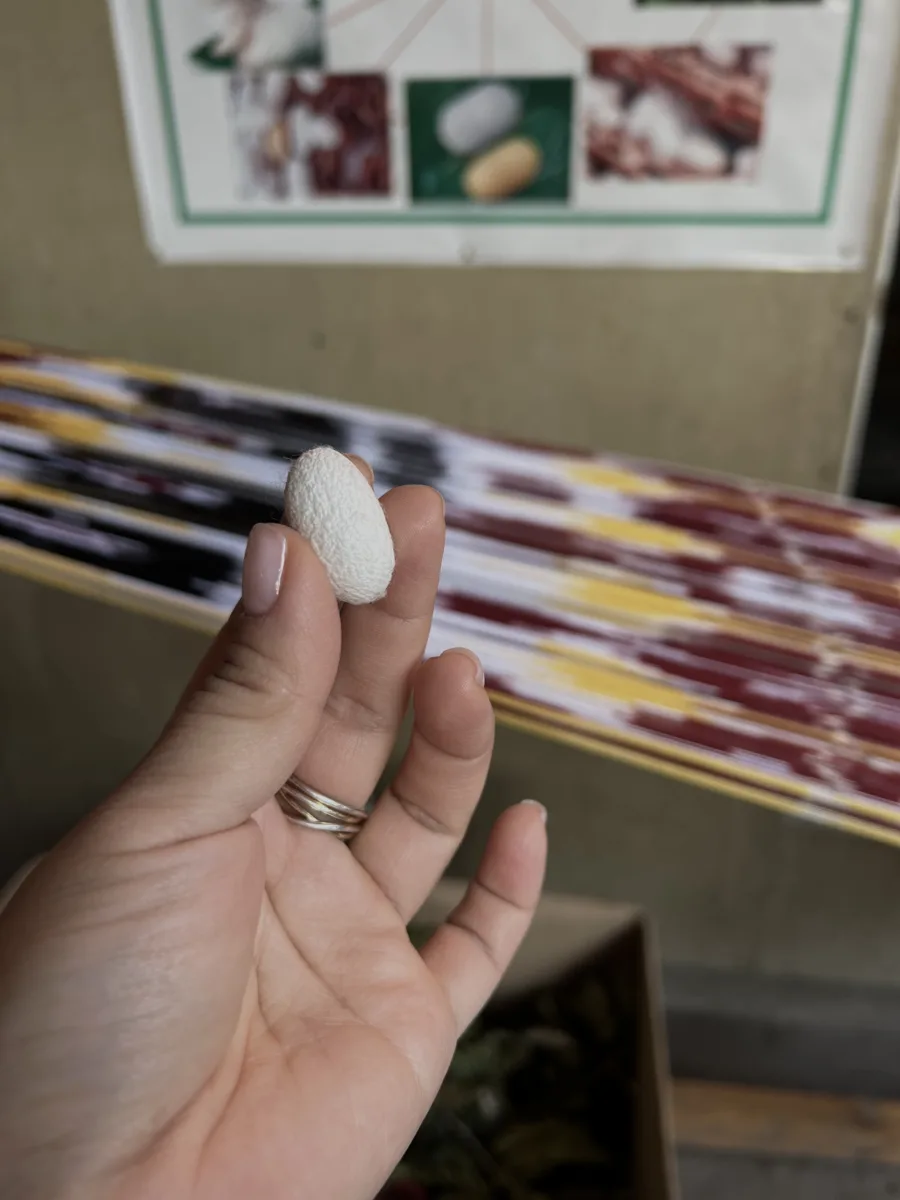
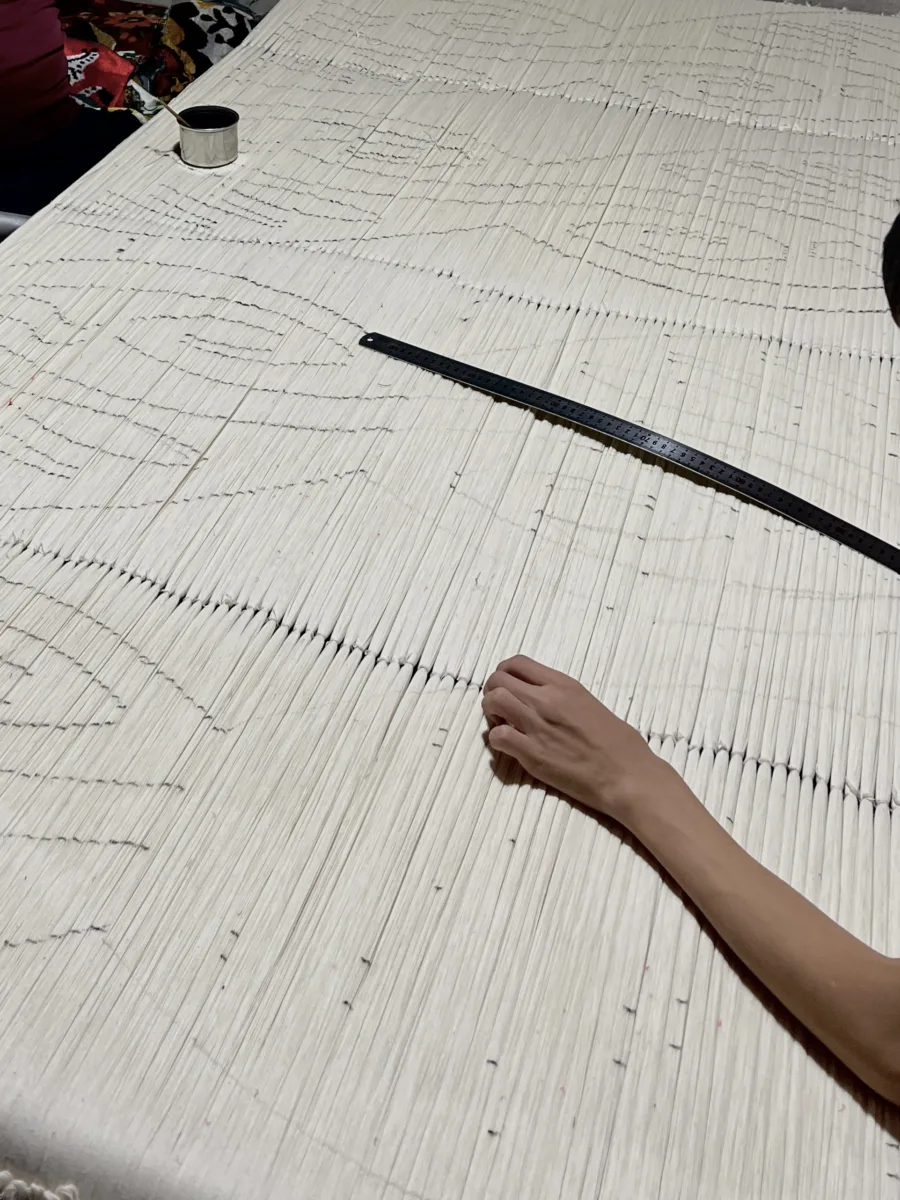
The region’s hot climate suited silkworm cultivation, while its clear mountain rivers provided water for dyeing. Above all, its location at the crossroads of trade routes was an advantage. By the sixteenth and seventeenth centuries, Central Asian ikat was being exported to the Ottoman Empire, India, and Russia.
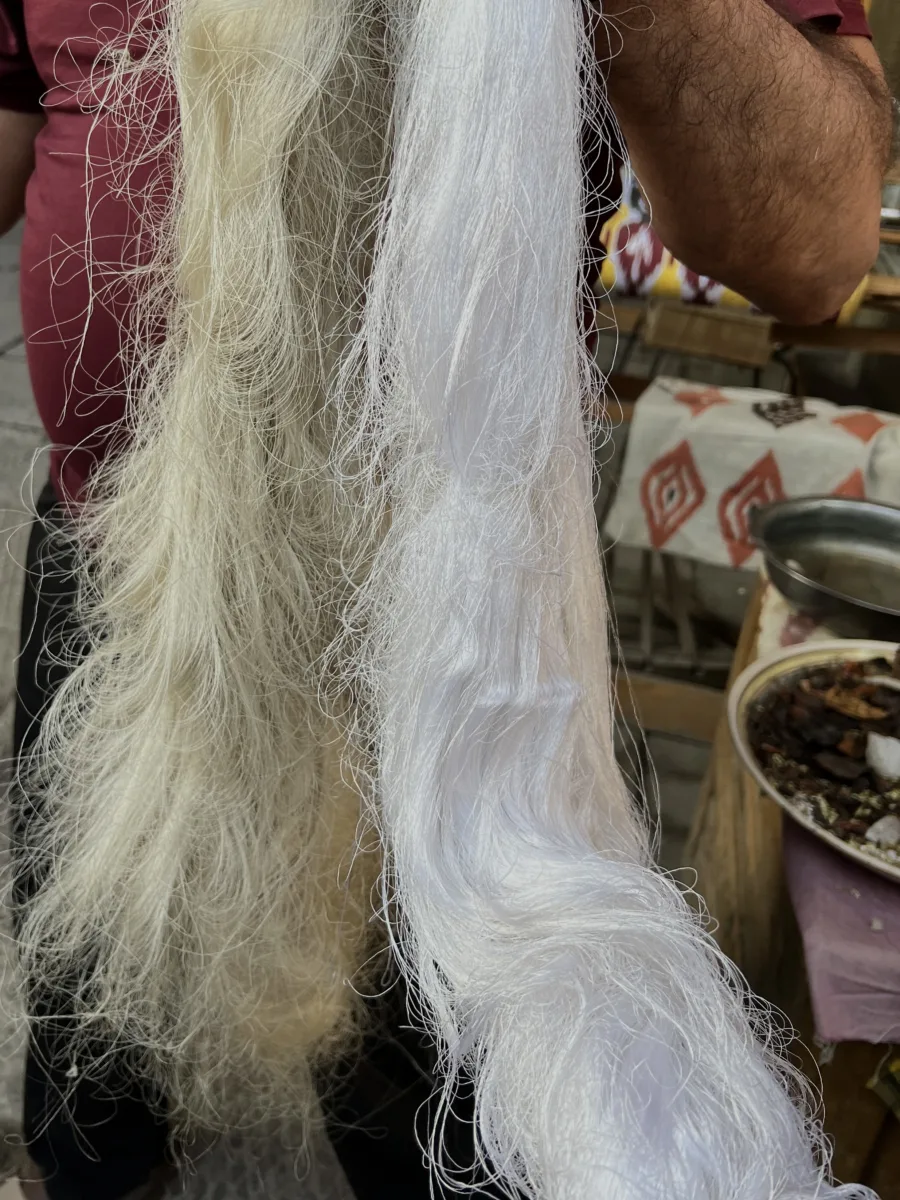
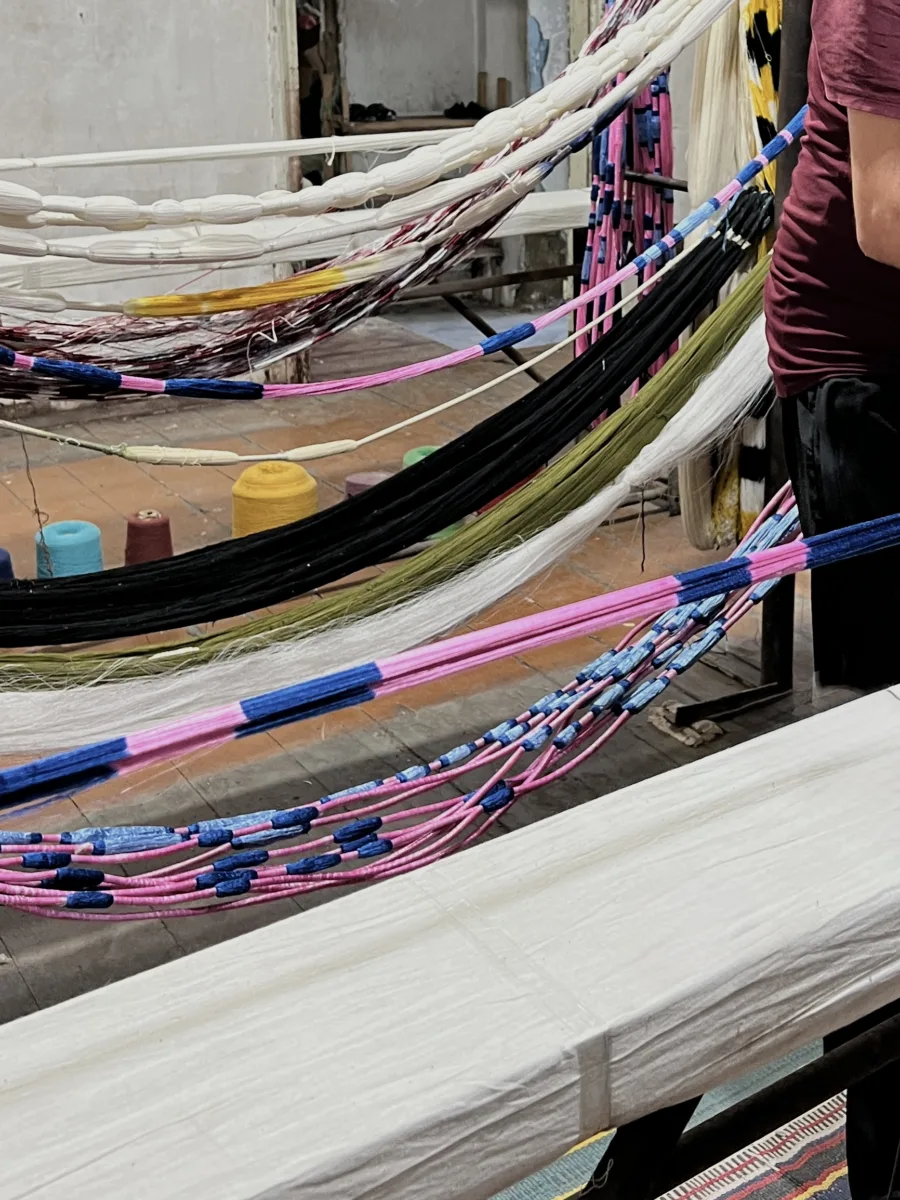
If conventional dyeing is like painting on a finished canvas, ikat is almost an act of magic. The artisan sees the pattern before the silk threads ever reach the loom. The threads are stretched across a frame up to 20 meters long, then tightly bound at specific points in the planned design. These bindings resist the dye, keeping the covered sections untouched.
Traditionally, natural dyes are used: indigo for blue, madder for red, and pomegranate peel for yellow. Each color requires a separate dye bath. The process is repeated six to eight times. Once the dyeing is complete, the threads are untied.
Soft transitions appear where dyed and protected sections meet — the very ‘clouds’ that define abr. A little dye seeps beneath the bindings, giving the edges their shimmering quality. The dyed warp threads are then set on the loom and interwoven with a solid-colored weft.
The process demands an almost musical sense of rhythm: the slightest shift can disrupt the integrity of the pattern. Bukhara ikat is known for dense motifs and a reddish-brown palette. Samarkand designs tend toward graphic clarity and a strong rhythm. Fergana ikat can be recognized by its large medallions and generous use of white.
Abr was never merely decorative. Clothing featuring these patterns communicated social status and regional identity. Here are some of its key motifs:
‘Kayrak’ is a zigzag traditionally associated with water or mountain slopes.
‘Pakhta’ (cotton) and ‘bodom’ (almond) are teardrop shapes reminiscent of the Indian paisley motif, but interpreted more abstractly as symbols of fertility and prosperity.
‘Kalampir’ represents a chili pepper. Its heat symbolizes vitality and protection against the evil eye.
‘Anor’ is the pomegranate, an ancient symbol of abundance in Persian culture, where every seed holds the promise of new life.
Above all, abr is defined by change. Its blurred outlines make the pattern feel fluid and alive. As the light shifts and the fabric drapes around the body, the clouds seem to breathe and their boundaries move. This visual metaphor for impermanence echoes a central theme of Persian poetry and Sufi philosophy.
By the early twentieth century, this textile culture had begun to decline. High production costs and falling demand led to the disappearance of the technique used to make alo-bakhmal, a pile-woven abr velvet. Later, during the Soviet era, mechanized factories almost entirely replaced handweaving, while synthetic dyes took the place of natural ones.
As a result, patterns became standardized, and handcraft techniques survived in only a handful of families. The traditions endured thanks to generations of artisans who began reviving lost methods toward the end of the century.
The Mirzaakhmedov family in Margilan has worked with ikat since the 1850s. Today, Rasul Mirzaakhmedov continues the tradition, preserving hand-binding and natural-dyeing techniques. In the late 1990s, he revived the lost art of making alo-bakhmal velvet ikat.
In Bukhara, the Toshev family is known for calligraphy, distinctive silk paper, and the careful preservation of suzani traditions — hand embroidery worked in silk on fabric.
At the same time, artists are finding new ways to reinterpret textile heritage.
Uzbek artist Malika Berdiyarova, a participant in the first Bukhara Biennial of Contemporary Art (2025), works at the intersection of craft and contemporary art. Through large-scale installations and textile works, she explores how fabric changes our perception of historical spaces.
A similar dialogue appears in the work of artist Dilyara Kaipova. She uses traditional Margilan ikat as a canvas, introducing symbols of global pop culture — from Mickey Mouse to glitch effects — into its patterns. Her textile artworks have gained international recognition through exhibitions including Astana Art Show (2019) and the large-scale PAXTA project (2022). Her work has also entered the permanent collections of institutions such as the Victoria and Albert Museum (V&A) in London, the Stedelijk Museum in Amsterdam, and the Royal Ontario Museum in Toronto. Said Atabekov, another major Central Asian artist, also explores traditional dress. In multimedia projects and installations shown at the Venice Biennale and the exhibition ‘All Nomads’ (Moscow, 2015), he uses traditional quilted robes (chapans) and textiles to reveal the tension between nomadic memory and globalization.
Over the past two decades, ikat has gained recognition in the fashion industry. One of its most prominent advocates has been Oscar de la Renta, which collaborated with the Mirzaakhmedov family on its Spring/Summer 2005 and Autumn/Winter 2008 collections. Dries Van Noten and Etro, brands whose identities are rooted in the exploration of textiles and ornament, have also embraced the aesthetics of resist dyeing. Every pattern is unique, and producing a length of fabric can take anywhere from two weeks to several months. This stands in contrast to the logic of fast fashion and restores a sense of value to clothing. Today, meticulous handcraftsmanship has become closely associated with luxury.
The defining qualities of abr — blurred edges, ephemerality, and chance — feel unexpectedly contemporary. Today’s visual culture is shaped by fatigue with flawless images and constant digital noise. Soft outlines, grain, and irregular textures offer a moment to exhale and embrace imperfection as a form of beauty.